


With Industry 5.0 on the horizon, new Macrium research finds more than three-quarters of manufacturers have yet to make Industry 4.0 a major investment priority – raising questions over whether the sector is ready for what comes next.
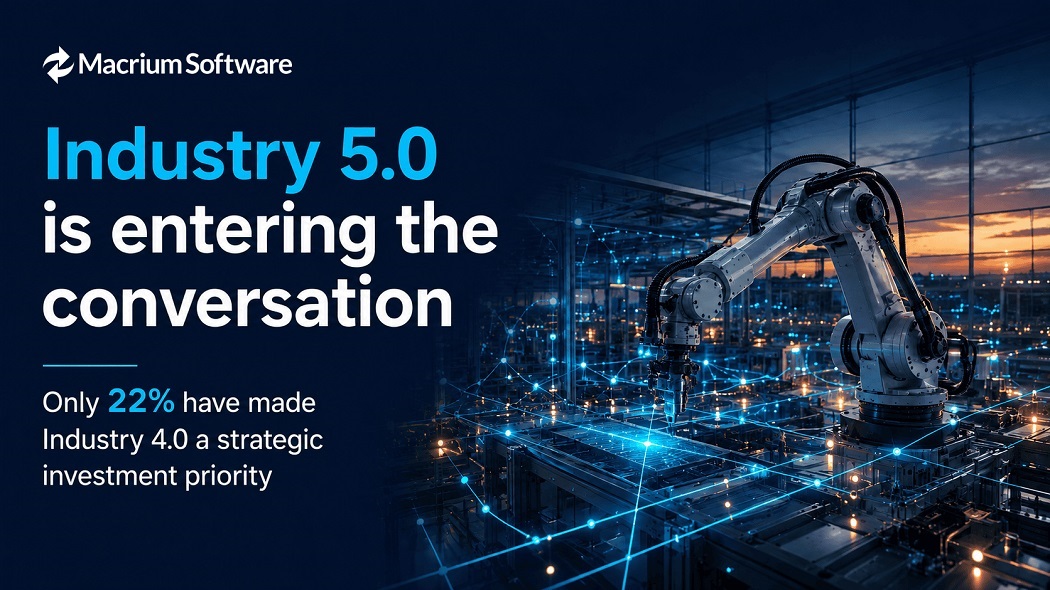
The manufacturing industry may be shifting its attention prematurely to Industry 5.0, as Macrium reveals that only 1 in 5 (22%) have made Industry 4.0 a top strategic priority and active area of investment.
Macrium’s latest report, The Current State of Backup & Recovery in Manufacturing 2026, which involved a survey of more than 100 verified IT and OT decision-makers at manufacturing organizations with at least 2,500 employees across North America and the UK, revealed that while Industry 5.0 is beginning to appear in discussions about the sector’s future, many manufacturers have yet to turn Industry 4.0 into a serious investment priority, creating a “readiness gap” that could prove costly when it comes to security, recovery, and resilience.
Conversations around Industry 5.0 have been steadily climbing up the agenda in recent months, with the European Commission describing it as a vision that “builds on the foundations” of Industry 4.0 while placing greater emphasis on human-centricity, sustainability, and resilience. Similar priorities are emerging in the US, where NIST, the US National Institute of Standards and Technology, is calling for emerging technologies to be integrated into US supply chains while promoting technology adoption and strengthening supply-chain resilience.
Research from the National Association of Manufacturers (NAM) also found that while only 28% of manufacturers currently describe their operations as “smart” or “somewhat smart,” 76% expect to reach that level within two years. This suggests that the reality on the ground does not yet match ambition when it comes to Industry 5.0.
“Industry 5.0 is an exciting direction for manufacturing, but there is a risk that the wider narrative gets ahead of the reality for most organizations,” said Dave Joyce, CEO at Macrium. “Its goals around resilience, sustainability and human-centricity matter, but delivery depends on connected systems, reliable data and recoverable operations. Our research suggests that, for much of the sector, those Industry 4.0 foundations have not yet become a serious investment priority.”
According to Macrium’s report, while 51% of respondents say Industry 4.0 is an important focus, they have not yet made it a major investment priority. A further 20% have Industry 4.0 on the radar for future planning, while 6% are discussing it without concrete plans. Together, these groups account for more than three-quarters of manufacturers surveyed.
The gap between ambition and implementation is also visible in wider industry research. Deloitte’s 2025 Smart Manufacturing and Operations Survey found that 92% of manufacturing executives believe smart manufacturing will be the main driver of competitiveness over the next three years. However, adoption of some of the technologies underpinning that ambition remains far from universal – only 46% reported using industrial IoT at the facility or network level, while just 29% were using AI and machine learning at that scale.
“Manufacturers understand the value of Industry 4.0, but turning it into reality is complex,” Joyce continued. “Cost pressures, legacy systems, the risks of interconnectivity, and limits on taking critical production systems offline mean progress takes time. As Industry 5.0 enters the conversation, the narrative needs to reflect those realities, and how the sector can evolve from them.”
The research suggests that recognition is not the problem. With 93% of manufacturers surveyed either considering Industry 4.0 important, actively investing in it, or including it in future planning, its strategic relevance is widely understood. The sharper dividing line is whether that awareness has translated into concrete investment, with only 22% currently describing it as both a top strategic priority and an active area of investment.
That does not diminish Industry 5.0’s potential. But as the conversation develops, the challenge for the sector will be to ensure its ambitions around resilience, sustainability and human-centricity remain connected to the constraints, complexity and investment realities facing manufacturers today.
The Current State of Backup & Recovery in Manufacturing 2026 Benchmark Report was conducted by Macrium in partnership with independent research body, NewtonX. It surveyed 100 verified IT and OT decision-makers from manufacturing organizations with at least 2,500 employees across North America and the United Kingdom.
To download the full report, click here.