



BY :TME
Robotics means movement, vibrations, tight space, and frequent configuration changes. Therefore, connections must be selected according to the work zone. In this article, we present HARTING solutions as elements of a complete connection architecture for robotics.
Plugs, sockets, and cables from HARTING have enjoyed the trust of professionals building complex industrial systems for decades, including in the field of automation/robotics. These products were designed to conduct diverse signals and power, as well as drive control. They are also resistant to many mechanical factors (continuous, repetitive motion, vibrations, etc.). The text below presents a generalized cross-section of the HARTING offer considering the requirements encountered in building industrial robots.
In this article, we discuss topics such as:
- General characteristics of robotics as a domain in automation
- Diversity of zones in robotic installations
- Key connector parameters for robotics
- Selection of HDC elements from HARTING’s offer
- Capabilities and limitations of M12 connectors/cables
- Optimal compromise offered by M17 products
- M23 plugs and sockets, i.e., high parameters and durability
Specificity of connections in robotics
Connectors used in robotic installations (whether part of an automated system or a standalone machine) are crucial for device durability, ease of maintenance, and scalability. At the same time, this engineering domain presents many challenges to designers related to motion, vibrations, control signal disturbances, etc. Additionally, connectors will be required to offer, among other things, quick replacement capability, ability to work in limited space, resistance to mechanical factors, and—very importantly—standardization. Properly selected connectors shorten robot installation commissioning time and reduce the risk of service errors.
This article presents exactly such HARTING brand solutions, excellently adapted to requirements of robots such as:
- grippers,
- presence and positioning sensors,
- transporters,
- positioners,
- turntables,
- cameras or vision systems.
Moreover, these connectors were designed with industry and automation in mind and can also serve applications strictly related to robotics:
- safety curtains,
- I/O modules,
- control cabinets,
- power and drive control systems.
Zones, or typical connector applications
Before describing specific product groups, let’s outline the key groups of applications, i.e., robotics zones, where HARTING connectors are used. Defining the general purpose will help find the product group with optimal specifications faster. Of course, this does not mean that other connector or cable families and series will be entirely unsuitable.
Robot tool and gripper area
If these elements are located at the arm endpoints, size and weight of used connectors will be very important—they indirectly affect the precision of the entire mechanism. Easy replacement and resistance to motion are also significant. The HARTING products best meeting such requirements are M12 cables and connectors. For higher current requirements, M17 as well.
Cable carriers and moving sections
In other words: places where static controller connections meet moving actuators. Such dynamic wiring and connectors must remain resistant to repetitive bending, protect the circuit against stress, and facilitate orderly cable routing. Practically all HARTING products meet such requirements or can be adapted for these applications.
Robot base, drives, and actuator modules
These areas will have increased current capacity requirements; connectors and cables will interface power supply, control signals, and direct drive control. Therefore, initially, models with contacts offering a large conduction surface should be considered, i.e., M17 and M23 products.
Connection of the control cabinet, robot, and station modules
Here, industrial-level resistance will be required, both in electrical parameters and mechanical robustness. Also important are extensive configuration options and high protection class. This perfectly matches the characteristics of HDC and M23 products.
Key challenges
Regardless of the specific application location, connectors and cables used in robotics will be exposed to many adverse environmental factors and various loads. It is worth keeping in mind that every contact, socket, and cable must demonstrate durability under such conditions.
Repetitive motion and vibrations
Robots and cobots (collaborative robots) operate in repetitive cycles, many hours a day. Each cycle involves axis movement, cable position changes, vibrations, and mechanical loads. If the products (parts) used for the connection are poorly chosen, consequences may appear only after some time, e.g., signal interruption, sensor errors, axis stoppage, communication issues, or emergency downtime.
When designing an installation and looking for suitable components, one should consider:
- using standardized cables and connectors in repetitive applications (ease of replacement);
- avoiding stresses at junction points between cable and connector and using connectors where cables are firmly clamped;
- cable lengths with margin, but no excess (specialized manufacturers like HARTING offer factory-made cabling in various sizes).
Limited space
Connector and cable size matters regarding mechanism precision and ergonomics—but this factor is also often dictated by design itself. Many components of a typical robot provide limited space, and besides grippers, suction cups, sensors, valves, pneumatic cables, sometimes cameras or additional I/O modules, they must also fit connectors, cables, and other interface elements. Reducing weight and cable count at the arm’s end, e.g., by using connectors adapted to specific applications, allows for complex mechanisms.
Modification, maintenance, and scaling
One of the most crucial features of any automation installation is scalability, modification, and as fast as possible maintenance/service (maximal downtime reduction). Multifunctional HARTING connectors allow building robot systems modularly, making them easy to reconfigure, calibrate, and upgrade.
Key product groups
Considering the numerous challenges presented to plugs, sockets, and wiring in robotics, let’s see how HARTING—a well-known European industrial connector manufacturer—addresses these. Below are several product groups the supplier designates mainly for automation applications.
HDC Connectors
As the name suggests, HDC connectors are resistant to very harsh environmental conditions. On the other hand, they are relatively large and heavy (many have metal housings). They also feature contacts capable of conducting high currents. Such connectors come in hundreds of variants, both power and signal.
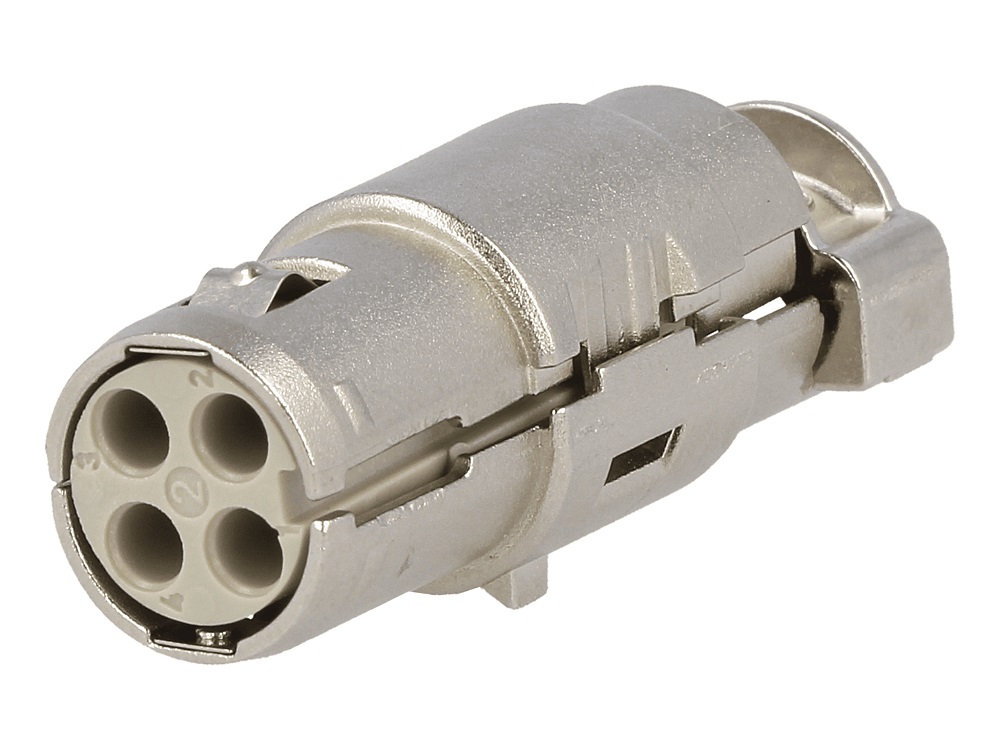
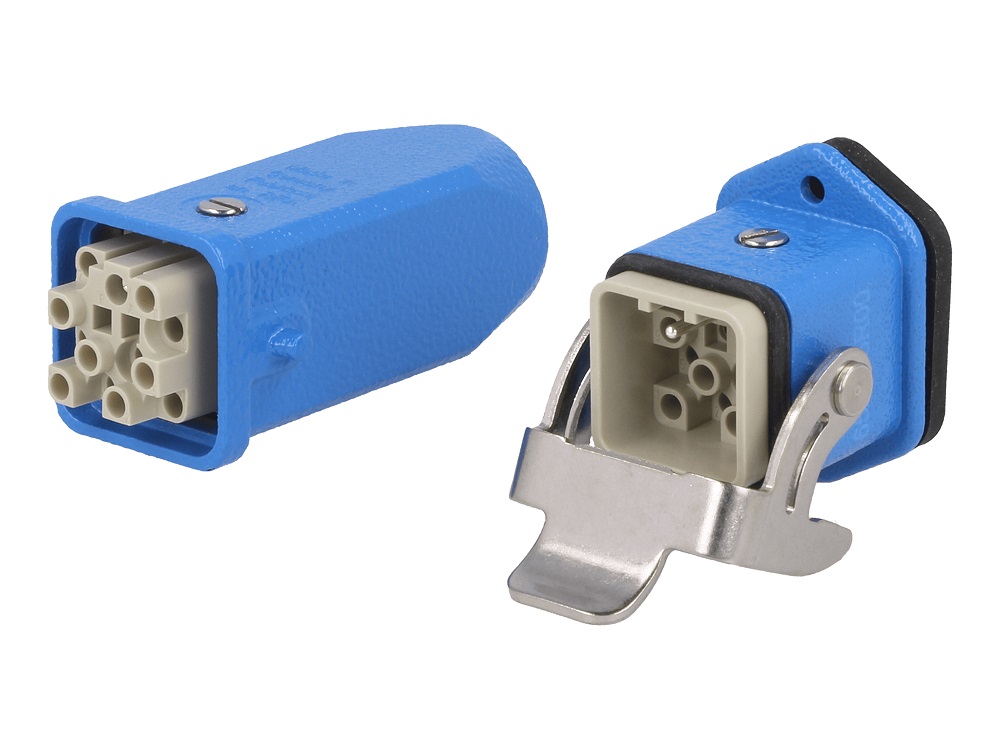
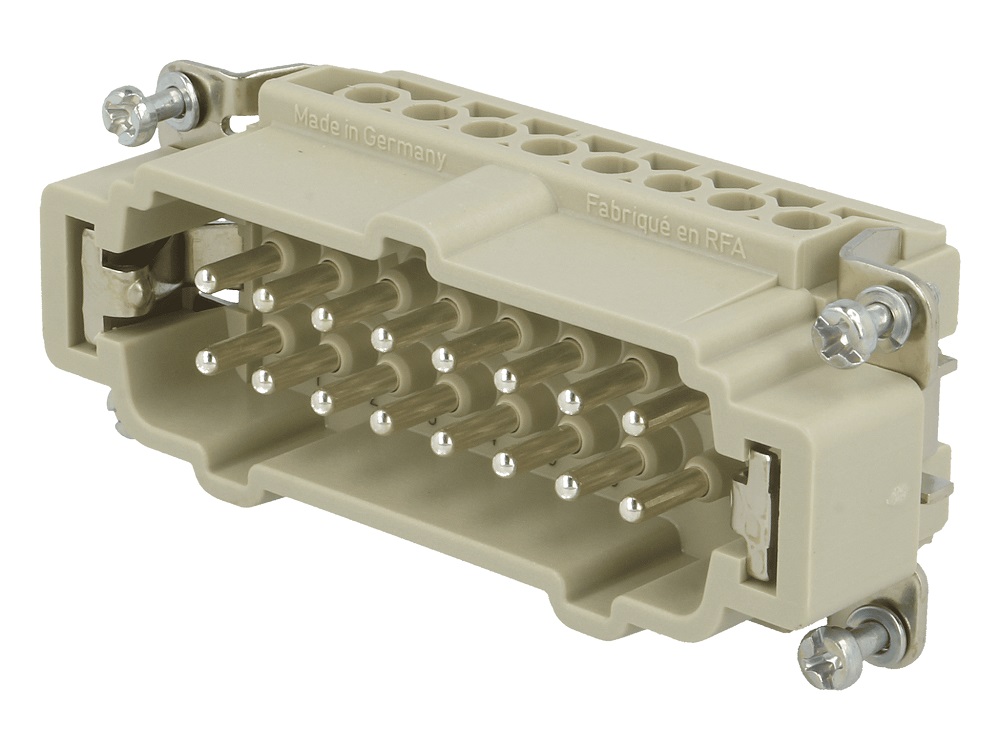
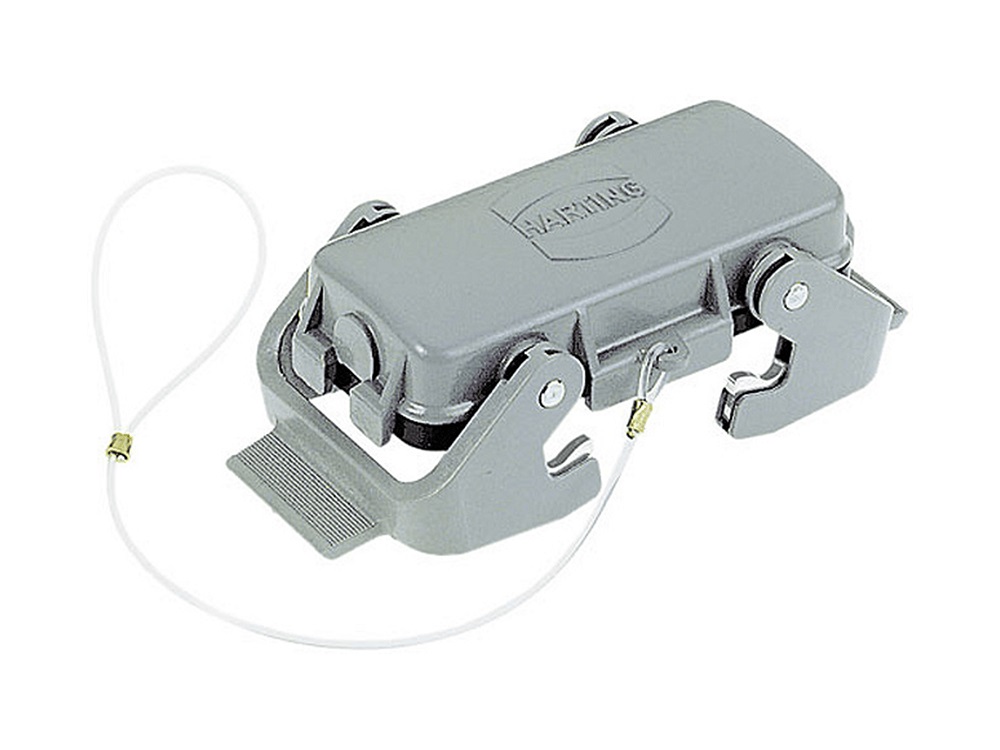
Some HDC connector versions are adapted to standard interfaces, e.g., conforming to RJ45 Ethernet connectors or DB serial connections used in computers. In robotics, such connectors are mainly used for interfaces between the robot, cabinet, and control and power supply modules. Modular design allows preparing plugs and sockets perfectly tailored to specific applications.
M12 Connectors and Cables
HARTING M12-format products include plugs, sockets, and factory-prepared cables. They offer compact design—at the cost of small contacts with limited current capacity (up to 12A and 630V).
This product group stands out with its wide range of factory-made cables. This arises from the fact that M12 connectors are standard across many sensor modules, meaning that parameters and wiring configurations are somewhat standardized. Although M12 is also used in unusual configurations, partial standardization (especially in the field of sensors and peripherals) helps speed up assembly and machine servicing.
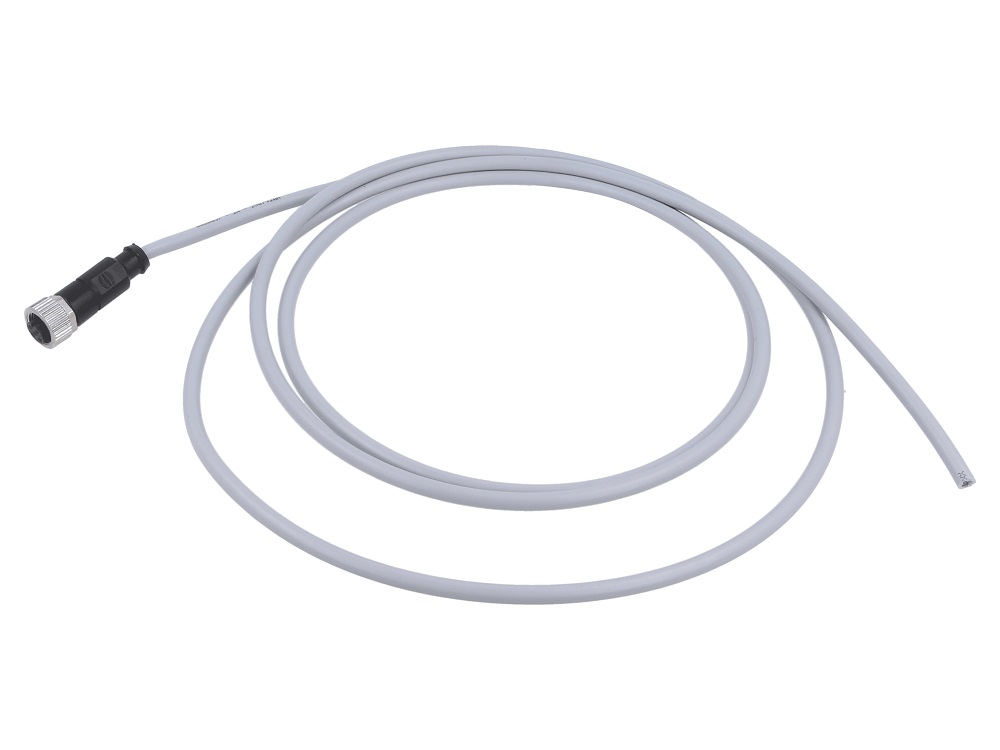
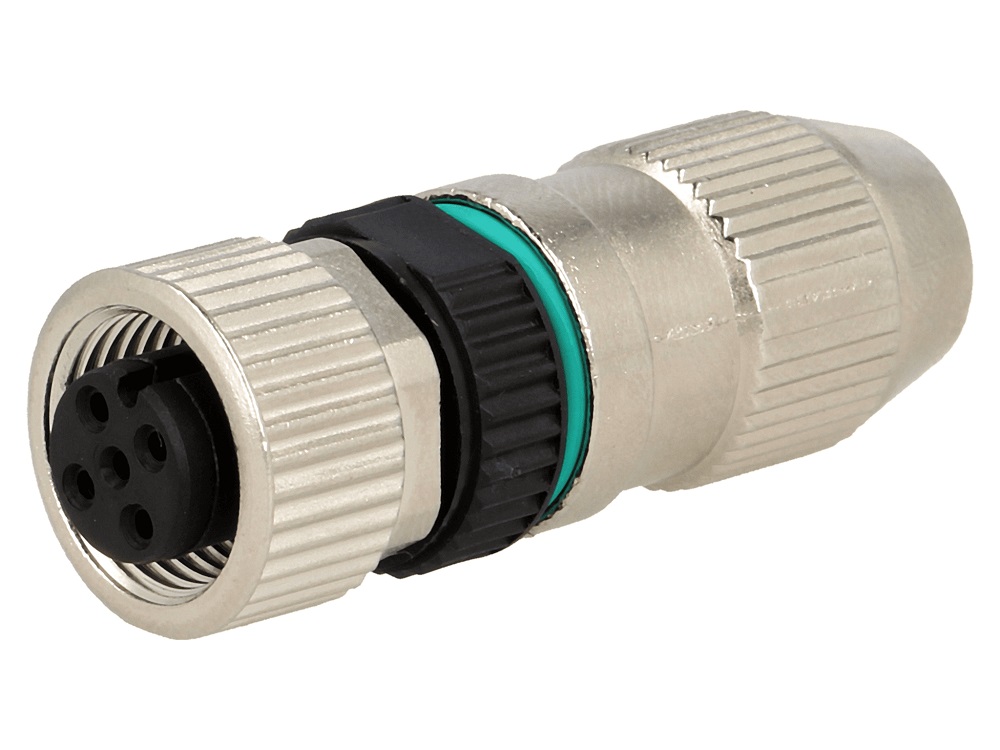
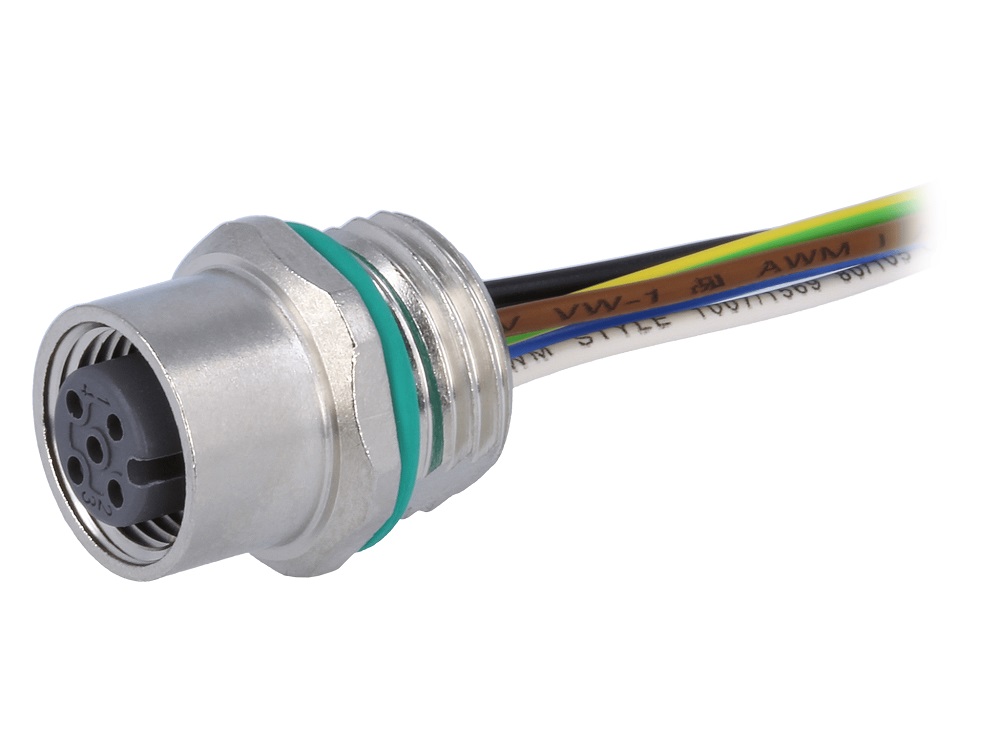
The small dimensions and wide range of ready solutions make M12 connectors meet the needs of many robot connections:
- at the gripper,
- at position sensors,
- at input/output modules,
- at safety devices,
- in communication connections.
Adapting the robot for using ready-made M12 cables shortens assembly and potential repair time. In case of failure, the entire cable can be replaced, which eliminates the need for time-consuming, detailed diagnostics.
M17 Connectors: a compromise with broad potential
M17 connectors are an intermediate solution between compact M12 and high-current M23. They fit in limited space but also offer relatively high electrical parameters (depending on the model). Such demand in robotics may arise when wiring for:
- compact actuator modules,
- auxiliary axes,
- accessory elements,
- signal connections with many channels.
M17 can be described as a solution where the application requires a more complex connection than typical M12, but compact size still matters
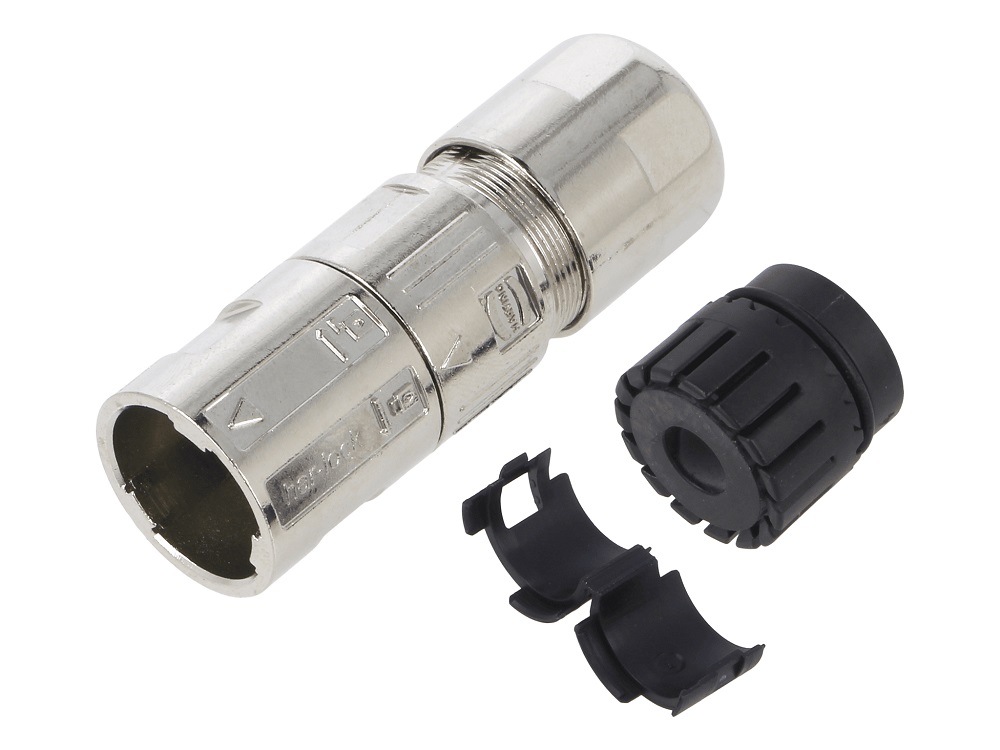
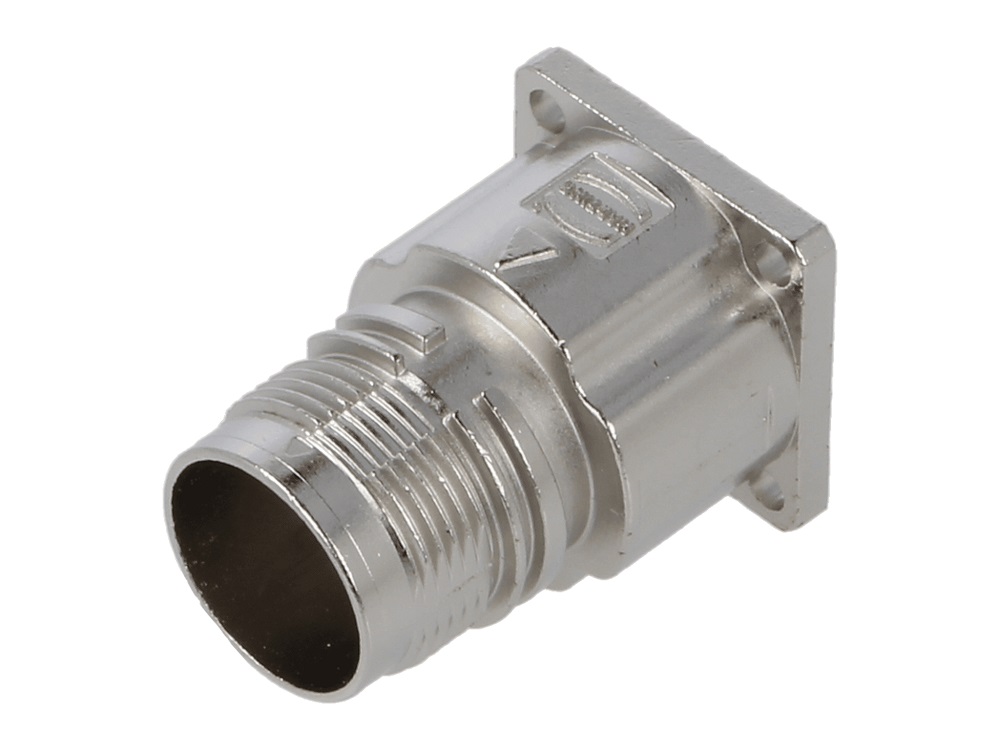
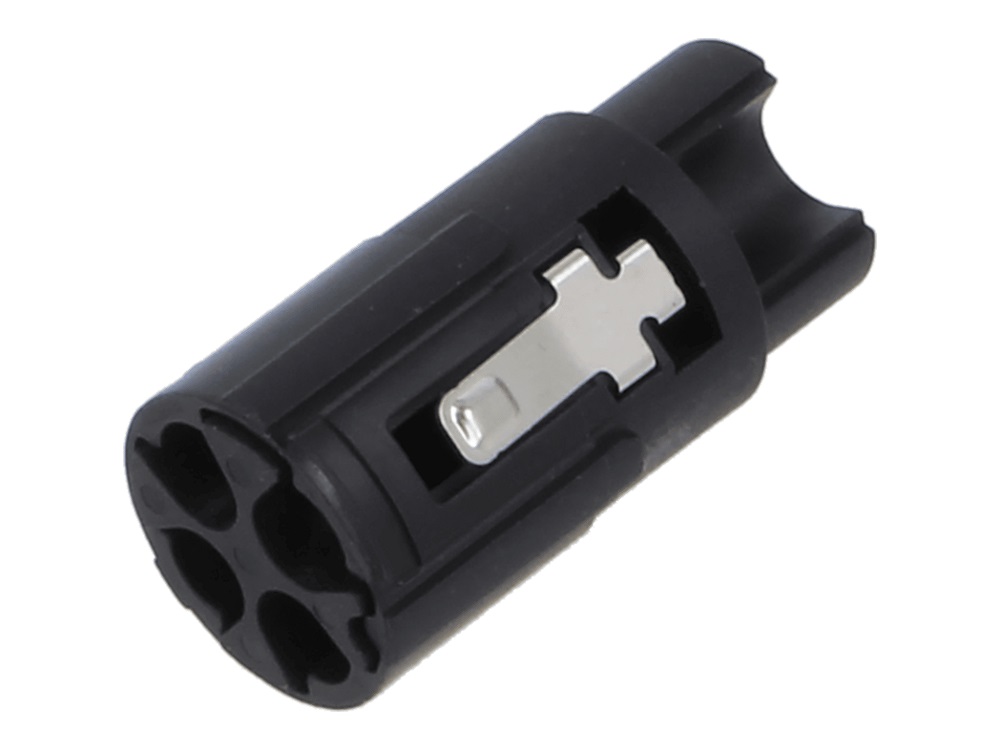
A single M17 connector can contain up to 17 contacts. Termination on the cable is done by crimping contacts on its cores, while the plug and socket are paired using a bayonet lock or thread. TME’s offer includes panel and cable-mounted models, in straight and angled versions, male and female.
M23 Connectors with many possibilities
The key feature of M23 connectors is their ability to transmit significant power (e.g., 20A, 300V) and sizes sufficient for various signal connections. The manufacturer distinguishes Power, Hybrid, and Signal elements in this offer. The connection can stably transmit power, control, and communication signals while still facilitating assembly and service.
In robotics and station automation, M23 handles the most demanding connections, e.g., drives, servomechanisms, encoders, actuators, turntables, and positioners.
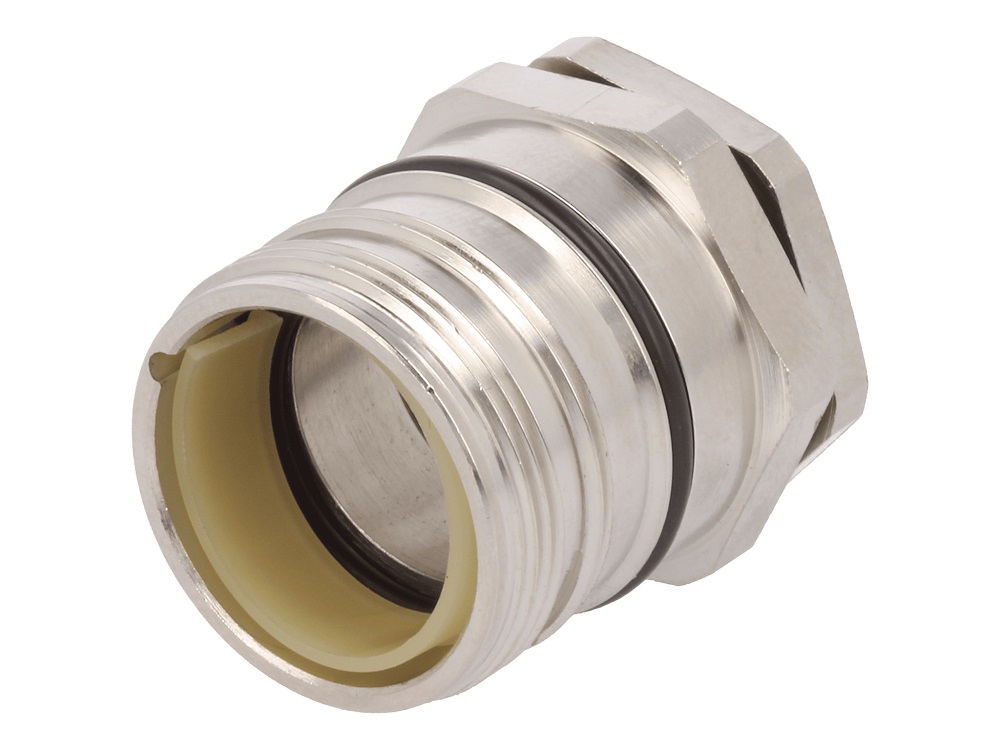
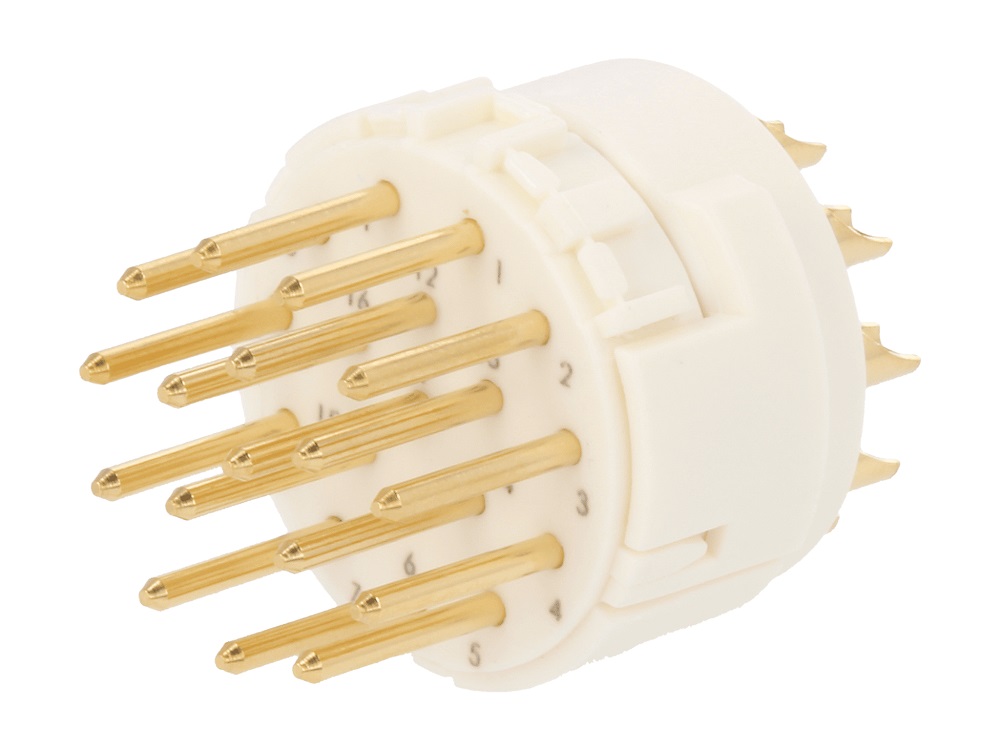
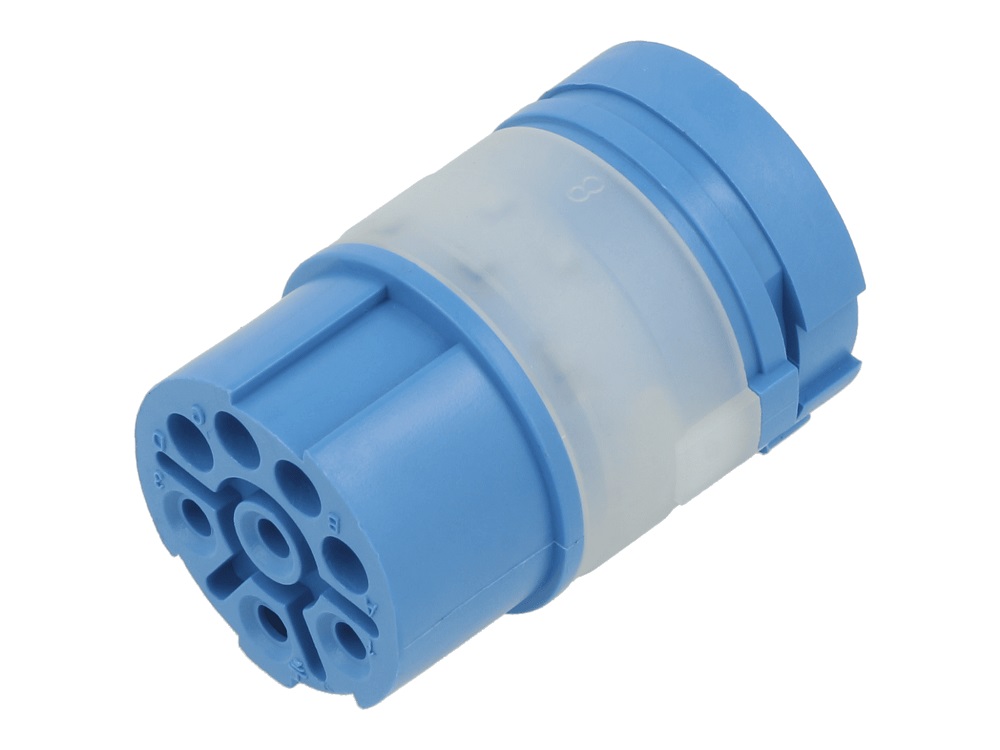
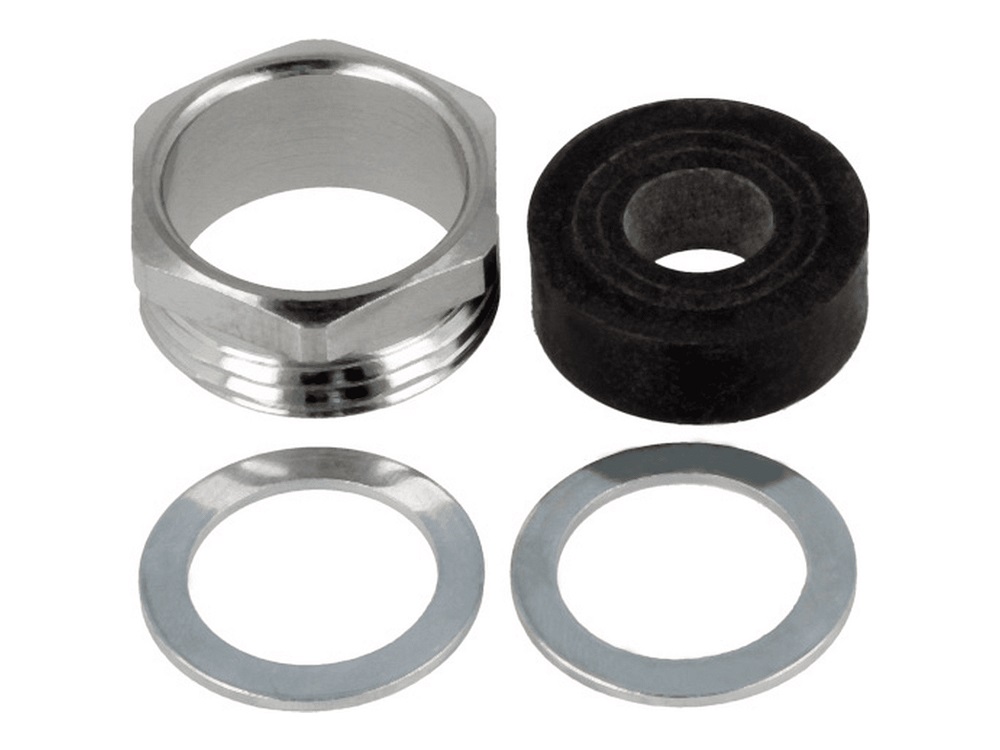
From the integrators’ and technicians’ perspective, important features include not only current capacity but also mechanical resistance, e.g., to vibrations. Key strengths of M23 connectors are reduced failure in drive connections and facilitated module replacement.
Summary of differences
Finally, let’s see the comparison of suggested product groups concerning their target zones. Keep in mind that the final choice of components must depend on the specific application’s parameters.
| Zone | Typical Requirements | Products |
|---|---|---|
| sensors and I/O modules near the robot | many connections, limited space | M12 |
| robot grippers and accessories | limited space, frequent changes | M12, M17 |
| cable carriers | repetitive bending, friction, stresses | M12, M17, M23 |
| drives, auxiliary axes, positioners | power, signals, stability under vibration | M23 |
| control cabinet to station connection | interface, modular service, durability | HDC, M23 |
| modular robotic cell | quick onsite assembly, fewer errors | M12, HDC, M23 |
| frequent reconfigurations | fast and repeatable accessory exchange | M12, M17, M23 |
Text prepared by Transfer Multisort Elektronik Sp. z o.o.